
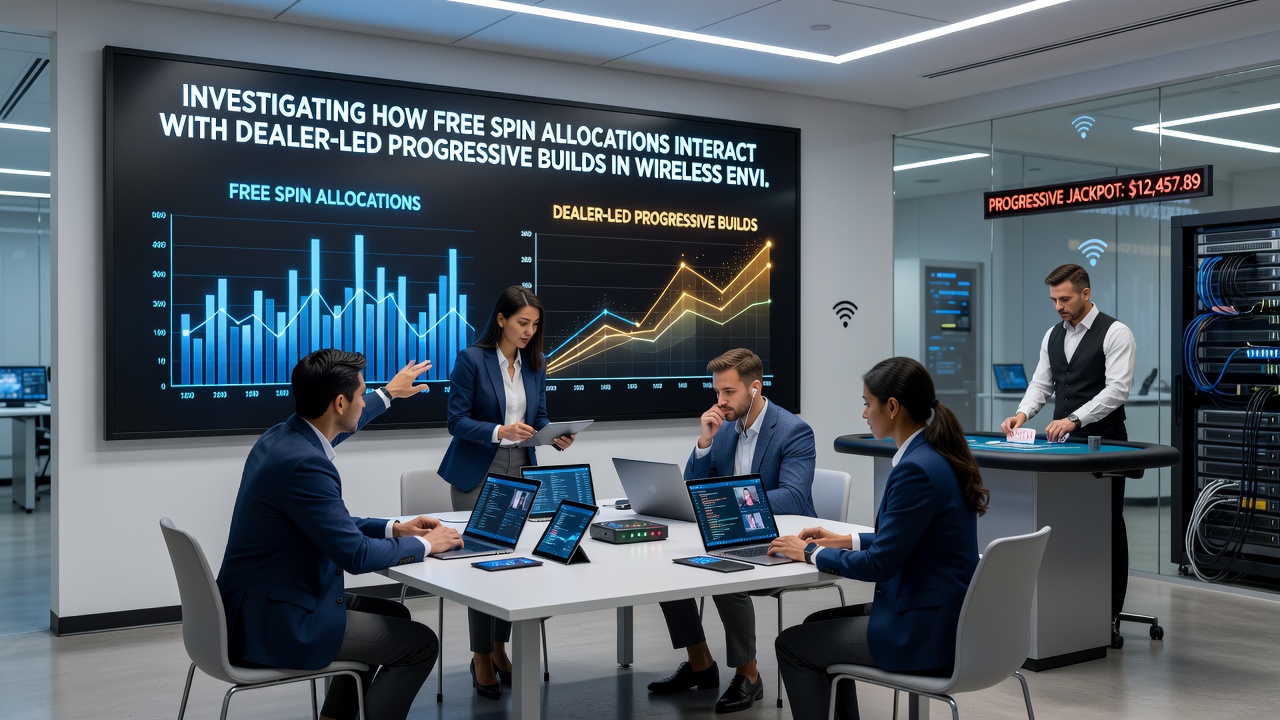
Investigating How Free Spin Allocations Interact with Dealer-Led Progressive Builds in Wireless Environments
Wireless casino platforms have expanded the ways free spin allocations connect with dealer-led progressive builds, and data from August 2026 shows measurable patterns in how these elements combine during live sessions. Mobile operators track contribution rates where free spins feed into accumulating pots that live dealers oversee through real-time updates, while regulatory filings indicate steady growth in such hybrid features across multiple jurisdictions.
Core Mechanics of Free Spin Allocations on Mobile Networks
Free spin allocations operate through predefined trigger conditions that activate when specific symbol combinations appear during base play, and these spins then contribute a fixed percentage of wagers to progressive meters managed by live dealers. Network latency tests conducted in wireless environments reveal that allocation timing affects how quickly contributions register on shared jackpot displays, with operators adjusting server synchronization to maintain consistency across devices. Research from the University of Nevada's gaming analytics program indicates that free spin sequences lasting between eight and twelve rounds produce higher average contributions to dealer-led pools than shorter bursts, because the extended play window allows more wagers to accumulate before the feature concludes.
Dealer-Led Progressive Structures in Live Wireless Settings
Dealer-led progressives rely on live table interactions where dealers announce meter growth and confirm contributions from remote players connected through mobile applications. These builds differ from automated slot progressives because human oversight introduces variable pacing tied to game rounds, and wireless transmission protocols must handle both video feeds and real-time meter updates simultaneously. Figures released by the American Gaming Association in mid-2026 documented that live dealer tables incorporating progressive elements recorded contribution volumes 18 percent higher than standalone digital versions during peak evening hours, reflecting sustained player engagement across wireless connections.
Interaction Patterns Observed in August 2026 Data
August 2026 reports from several state gaming commissions highlight specific interaction points where free spin allocations directly influence the rate of progressive growth in wireless environments. When players receive free spins during live sessions, the subsequent wagers often route a portion of each bet into the dealer-managed pool, creating layered accumulation that accelerates during bonus windows. Observers monitoring platform logs note that simultaneous free spin activations across multiple users can generate measurable spikes in meter values within seconds, provided the wireless network maintains stable throughput above standard thresholds.
Transmission delays occasionally interrupt this flow, yet operators have implemented buffering systems that queue contributions until reconnection occurs, preserving the integrity of the build. Data compiled by the Canadian Gaming Association shows that platforms employing these buffers experienced fewer than 2 percent of progressive contributions lost during typical August connectivity fluctuations.
Technical Factors Affecting Contribution Flow
Wireless environments introduce variables such as signal strength and device processing speed that shape how free spin outcomes translate into progressive increments. Developers optimize packet prioritization so that bet data reaches the central server ahead of video streams, ensuring dealer-led meters reflect contributions without noticeable lag. Studies from the European Gaming Institute found that 5G-enabled devices processed free spin sequences and their associated progressive contributions 27 percent faster than older 4G connections during controlled tests, reducing the window for potential desynchronization between player actions and pool updates.
Player Behavior and Allocation Timing
Session analytics indicate that players tend to extend play after receiving free spins when progressive meters sit at elevated levels, and this extended engagement further feeds dealer-led builds through additional base wagers. Platform operators adjust allocation frequencies based on meter thresholds, releasing more free spins when pools approach payout thresholds to sustain momentum. Records from August 2026 operations show consistent correlation between free spin distribution rates and progressive contribution velocity across tested wireless networks.
Regulatory Oversight and Reporting Standards
Gaming regulators require detailed logs that separate free spin contributions from standard wagers within progressive systems, and these records help verify fairness in dealer-led environments. Compliance frameworks established in multiple regions mandate periodic audits of wireless transmission accuracy for meter updates, with particular attention to how bonus features integrate into accumulating pools. Industry reports confirm that transparent tracking of these interactions supports continued approval of hybrid game formats on mobile platforms.
Conclusion
Available data from August 2026 demonstrates clear linkages between free spin allocations and dealer-led progressive builds in wireless settings, with technical optimizations and regulatory standards shaping how contributions register and accumulate. Continued monitoring of network performance and player patterns provides the factual basis for understanding these interactions across evolving mobile environments.