How Regulatory Frameworks in Emerging Markets Influence Accumulating Reward Mechanisms Across App-Based Entertainment Ecosystems
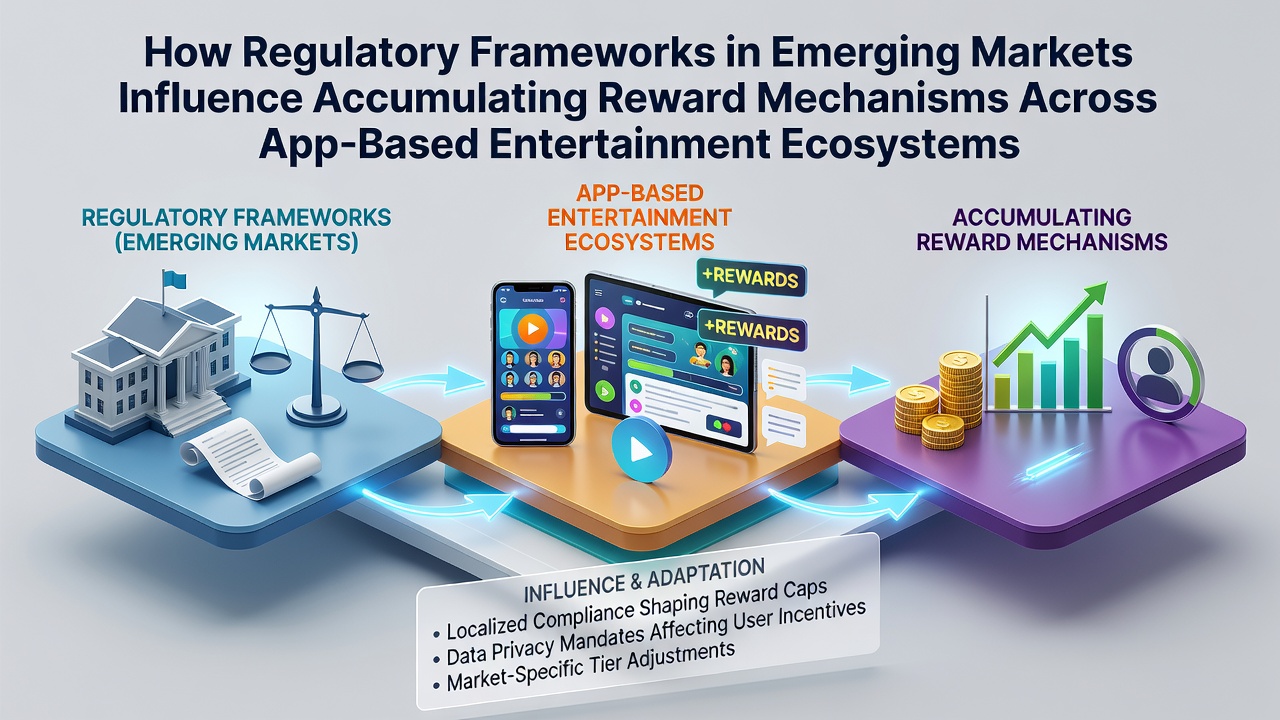
Regulatory frameworks in emerging markets shape how app-based entertainment platforms design and manage accumulating reward mechanisms, which include points systems, loyalty tiers, and in-app progression features that users build over time. These rules often target payment processing, data handling, consumer protections, and digital transaction limits, which in turn affect how rewards accumulate and get distributed across mobile gaming, streaming services, and interactive entertainment apps. Data from August 2026 shows continued expansion of such frameworks in regions including Latin America, South Asia, and parts of Africa, where mobile app adoption rates have climbed steadily according to industry reports.
Core Elements of Regulatory Influence
Payment regulations frequently set the boundaries for reward accumulation by controlling transaction volumes and verification requirements. In Brazil, updated central bank guidelines on digital payments require apps to verify user identities before processing microtransactions tied to reward pools, and this has led developers to adjust accumulation rates so that users earn points more gradually while meeting compliance checks. Researchers tracking these changes note that similar patterns appear in Indonesia, where financial services authority rules cap daily spending on entertainment apps and force platforms to segment reward features based on verified account levels.
Data privacy statutes add another layer because they restrict how apps collect behavioral information used to personalize reward offers. India's Digital Personal Data Protection Act, enforced through phased rollouts reaching full effect by mid-2026, limits cross-border data transfers that many reward engines rely on for real-time point calculations. Platforms operating in this environment have shifted toward on-device processing for accumulation logic, which slows some features but maintains compliance.
Regional Variations Across Emerging Markets
South Africa’s financial sector conduct authority has introduced consumer protection measures that require clear disclosure of how reward points convert into actual benefits, and this has prompted entertainment apps to redesign their accumulation dashboards with simplified tracking tools. In contrast, Nigeria’s central bank directives on fintech integrations emphasize transaction logging that affects how apps pool rewards across user bases, often resulting in slower release of accumulated bonuses until audits clear. Observers note these differences create distinct operational environments where developers must tailor reward structures rather than apply uniform global models.

Academic studies from institutions in Southeast Asia highlight that Vietnam’s data localization requirements have pushed several large entertainment platforms to store reward history domestically, which increases infrastructure costs yet allows continued operation of tiered accumulation systems. These adjustments illustrate how frameworks balance innovation with oversight, and figures from regional trade groups indicate that compliance-related modifications now represent a measurable portion of development budgets in affected markets.
Technical Adaptations by Platform Operators
App developers respond to these rules by implementing modular reward engines that can toggle accumulation speeds or cap total points based on local regulations. One documented approach involves using geofencing to apply different accumulation formulas depending on user location, which ensures adherence without fragmenting the entire user experience. Industry analyses from organizations tracking digital economies reveal that such technical workarounds have become standard practice, particularly for platforms serving multiple emerging jurisdictions simultaneously.
Payment method restrictions also play a role because many markets limit certain digital wallets or require partnerships with licensed providers. This influences how users fund their accounts to unlock faster reward accumulation, and platforms have introduced alternative earning paths such as time-based challenges or social engagement metrics that do not rely solely on monetary deposits. Evidence from app performance metrics collected in 2026 demonstrates measurable shifts toward these non-monetary accumulation routes in regulated territories.
Challenges in Cross-Border Operations
Companies managing entertainment apps across borders face the task of reconciling conflicting requirements from different regulatory bodies. A platform active in both Brazil and India, for example, must satisfy distinct verification timelines and data storage rules while keeping reward accumulation consistent enough to retain users. Reports from international research networks indicate that these reconciliation efforts often involve dedicated compliance teams and iterative software updates released on quarterly cycles.
Enforcement variations add complexity because some jurisdictions apply rules strictly from the outset while others allow phased implementation. This uneven landscape means accumulation mechanisms sometimes operate differently for users in neighboring countries, which can affect perceived fairness and engagement levels according to user behavior datasets shared in industry forums.
Conclusion
Regulatory frameworks continue to evolve in emerging markets and directly shape the design of accumulating reward mechanisms within app-based entertainment ecosystems. Payment controls, privacy rules, and consumer safeguards each contribute to how points and benefits build and get redeemed, prompting ongoing technical and operational adjustments by platform operators. Information gathered through August 2026 underscores that these influences remain dynamic, with developers adapting systems to maintain functionality across diverse regulatory environments while adhering to local requirements.