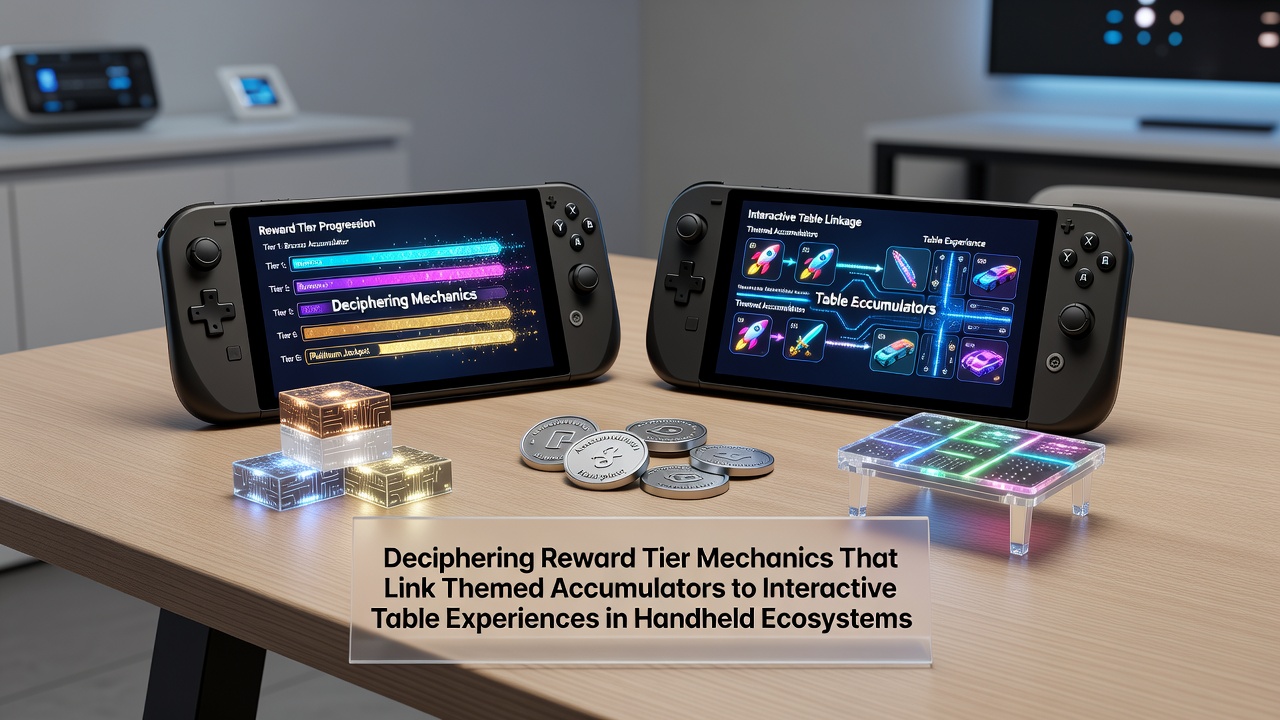
Deciphering Reward Tier Mechanics That Link Themed Accumulators to Interactive Table Experiences in Handheld Ecosystems
Players encounter reward tier mechanics that connect themed accumulators directly to interactive table experiences across handheld ecosystems, where mobile platforms integrate accumulation systems with live-action table elements. These structures operate through layered progression models that track activity in themed slots or accumulator games, then translate accumulated values into access or enhancements for table-based interactions on smartphones and tablets.
Core Components of Themed Accumulators
Themed accumulators function as centralized collection points that gather contributions from multiple game sessions, often tied to specific motifs such as adventure narratives or seasonal events. Data from handheld device usage shows these accumulators increment through standard wager activity, with values feeding into tier thresholds that unlock corresponding benefits. Researchers at institutions examining digital gaming patterns note how these systems maintain continuity between sessions, allowing users to resume progress without resetting accumulated totals when switching devices within the same ecosystem.
Mechanics rely on algorithmic distribution where portions of each bet contribute to the accumulator pool, creating visible growth indicators that players monitor through dashboard interfaces. This process aligns accumulator levels with tier advancement, where reaching milestones such as bronze, silver, or gold categories grants incremental privileges in linked table environments. Observers note that handheld ecosystems facilitate real-time synchronization, ensuring accumulator updates reflect instantly across both slot-style and table-style applications on the same device.
Tier Progression and Integration Pathways
Tier structures establish clear pathways from accumulator activity to table game participation by defining eligibility criteria based on accumulated volume. Lower tiers typically provide entry-level access such as modified table limits or introductory multiplier options, while higher tiers unlock advanced features including exclusive seating in virtual table lobbies or enhanced interaction tools during live rounds. Studies of mobile gaming traffic indicate that these linkages encourage sustained engagement as users advance through tiers to access more complex table mechanics.
Integration occurs via shared user profiles that carry accumulator data into table interfaces, where the system automatically applies tier benefits without requiring separate logins or transfers. For instance, an accumulator tied to a mythology theme might convert points into table-side boosts like additional card draw options or extended betting windows during interactive sessions. This seamless connection operates through backend APIs that handheld platforms employ to maintain consistency across game categories.
Handheld Ecosystem Dynamics in June 2026
By June 2026, handheld ecosystems demonstrate expanded capacity for these linked systems as device processors handle simultaneous accumulator tracking and table rendering with reduced latency. Network data reveals increased cross-category play, where users transition from accumulator-focused sessions to table interactions within single app environments. Regulatory reports from bodies such as the New Jersey Division of Gaming Enforcement document steady growth in mobile table game volumes alongside accumulator-based promotions during this period.
Developers implement adaptive algorithms that adjust tier requirements according to regional device usage patterns, ensuring mechanics remain balanced across varying network conditions. Those examining platform analytics find that handheld users benefit from push notifications that alert them to nearing tier thresholds, prompting shifts toward table experiences once accumulators reach critical levels. This dynamic supports broader ecosystem stability as operators refine reward linkages based on aggregated performance metrics.

Operational Examples Across Platforms
One documented case involves a themed accumulator centered on exploration motifs that feeds directly into blackjack variants on mobile, where tier advancement modifies dealer interaction speeds and payout structures. Platform records show participants advancing tiers through consistent accumulator contributions then applying those levels to table rounds for customized experiences. Similar patterns appear in roulette integrations, where accumulator milestones trigger visual theme overlays that persist across handheld sessions.
Another instance highlights accumulator systems linked to poker table ecosystems, with tiers determining access to private mobile tables or collaborative features among participants. Industry reports compiled by organizations tracking digital entertainment trends, including data shared through the Gaming Standards Association, outline how these connections rely on standardized protocols for data exchange between accumulator modules and table engines. Such examples illustrate the practical application of tier mechanics without altering core game rules.
Technical Considerations in Implementation
Implementation requires robust data handling to prevent discrepancies between accumulator states and tier applications during device handoffs or network interruptions. Engineers design fallback mechanisms that preserve progress locally until reconnection restores full synchronization. Research into mobile architecture indicates these safeguards maintain user trust in the linkage process while supporting uninterrupted transitions between themed accumulation and table interactions.
Security protocols encrypt accumulator values and tier assignments to protect against unauthorized modifications, with verification steps embedded at each progression checkpoint. Handheld ecosystems incorporate biometric authentication layers that align with these systems, adding verification before tier benefits activate in table environments. Figures from technology assessments confirm that such measures scale effectively as mobile user bases expand through 2026.
Conclusion
Reward tier mechanics establish functional bridges between themed accumulators and interactive table experiences within handheld ecosystems through structured progression and synchronized data flows. These connections operate consistently across platforms, supported by technical standards and regulatory oversight that track performance metrics. Continued refinement in June 2026 and beyond reflects ongoing adaptation to device capabilities and user activity patterns, sustaining the integrated framework without deviation from established operational principles.